
Bookkeeping and accounting professionals require distinct skill sets to manage financial information effectively. This allows accountants to then analyze the records to provide insights and guidance. Bookkeeping and accounting may seem like interchangeable terms, but they have distinct roles in a business. Bookkeeping primarily https://www.bookstime.com/ involves data entry and recording transactions, whereas accounting involves deeper analysis and interpretation of financial data. The main difference between bookkeeping and accounting is how the financial transactions or data are treated.

Financial Accounting
- Entry-level bookkeepers may earn on the lower end of the spectrum, while those with several years of experience or specialized skills might command higher salaries.
- The size and complexity of your business are key factors to consider when deciding between a bookkeeper and an accountant.
- This ongoing process offers a clear picture of a company’s financial health at any given time.
- Not all businesses need, or can afford, the in-depth expertise of a hired accounting professional.
- However, as the business grows, it’s more common to have separate professionals for each role due to the increasing complexity and specialization required.
- Even with modern tools and automation, both functions still play distinct roles.
- The accounting process involves identifying, measuring, and recording financial transactions and events.
Understanding the difference between the two can help you determine your career path and the educational steps needed to get there. For bookkeepers, this reduces repetitive data entry and frees time to focus on accuracy.For accountants, it means faster access to updated information and a clearer view of the business. Because accounting relies on judgment and technical knowledge, accountants usually require deeper training in standards, tax rules, and financial analysis.

Cash Flow Management
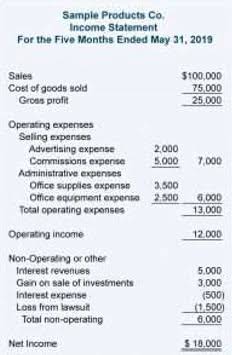
Accountants will then use the updated trial balance to produce financial statements. Since accountants use the information gathered by bookkeepers to prepare larger financial statements and reports, the accounting process wouldn’t be possible without the help of bookkeepers. While accounting is similar to bookkeeping in that it involves documenting business financial transactions, the former process is more in-depth. Bookkeeping is the process of recording all financial transactions a business makes from its opening to its closing. This practice helps establish the company’s financial outcomes and allows owners to track where their money is going.
How Businesses Benefit from Both Roles
All sales and purchases made by your business need to be recorded in the ledger, and certain items need supporting documents. The IRS lays out which business transactions require supporting documents on their website. You launched your business to serve customers and build something meaningful, not to wrestle with spreadsheets or IRS notices. This module reinforces the foundational principles of bookkeeping through practical application. You will review key accounting concepts—such as the accounting equation, double-entry method, and financial statements—by completing real-world bookkeeping scenarios.
- The problem is so common that many accounting firms employ in-house bookkeepers to handle this work.
- To avoid costly financial mistakes, it’s best to work with an experienced financial professional as early as possible.
- Many businesses now use specialized programs for even the smallest tasks, which has changed how bookkeepers and accountants do their jobs.
- Bookkeepers maintain complete records of all money entering and leaving the business.
- Their bookkeeping offerings consist of a software platform that you connect your accounts to, with either Live Assisted or Full-Service Bookkeeping.
- Bookkeepers, accountants, and Certified Public Accountants (CPAs) all play different roles in managing finances.
It eliminates the need for manual uploads, with your data appearing in your account instantly. This ensures your bookkeeping team can work efficiently, keep your books up to date, and help you get the most out of the service. With real-time insights, you can make on-the-fly decisions about where to spend and where to save, helping your business stay on budget. The Bench platform gives you monthly financial statements and expense overviews to keep you in control of your money. At-a-glance visual reports help you see the big picture and give you actionable insights to help you grow your business. Bench simplifies your small business accounting by combining intuitive software that automates the busywork with real, professional bookkeeping for cleaning business human support.
- Though many confuse the two roles, bookkeepers and accountants have distinct differences.
- Job options and salaries can be very different for bookkeepers and accountants.
- These days, most popular accounting software programs do both bookkeeping (transaction recording) and accounting (preparing financial reports, analyzing trends, etc.).
- Some popular accounting software options, like QuickBooks Online and Xero, blend bookkeeping and accounting tools for business growth.
For Planning
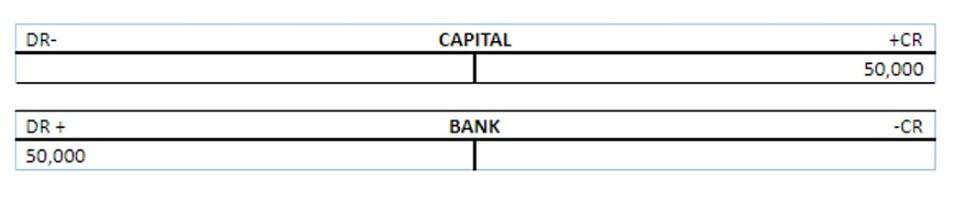
With accurate records, businesses can create realistic budgets and control spending. Manual bookkeeping involves recording transactions by hand in physical ledgers. While traditional, this method is becoming less common due to digital alternatives. Double-entry bookkeeping records each transaction twice once as a debit and once as a credit.
Certified Public Accountant (CPA)
Bookkeeping is the process of recording and organising all financial transactions within a business. Bookkeepers maintain accurate difference between bookkeeping and accounting and up-to-date records, ensuring that every financial transaction is documented correctly. Accountants like us take the clean, organized data prepared by bookkeepers to perform high-level analysis. This can include preparing and filing tax returns, performing audits, financial forecasting, and providing business advice.
